I had a front row seat for all the events on Historic Jefferson Street which was the backdrop for the Civil Rights Movement...
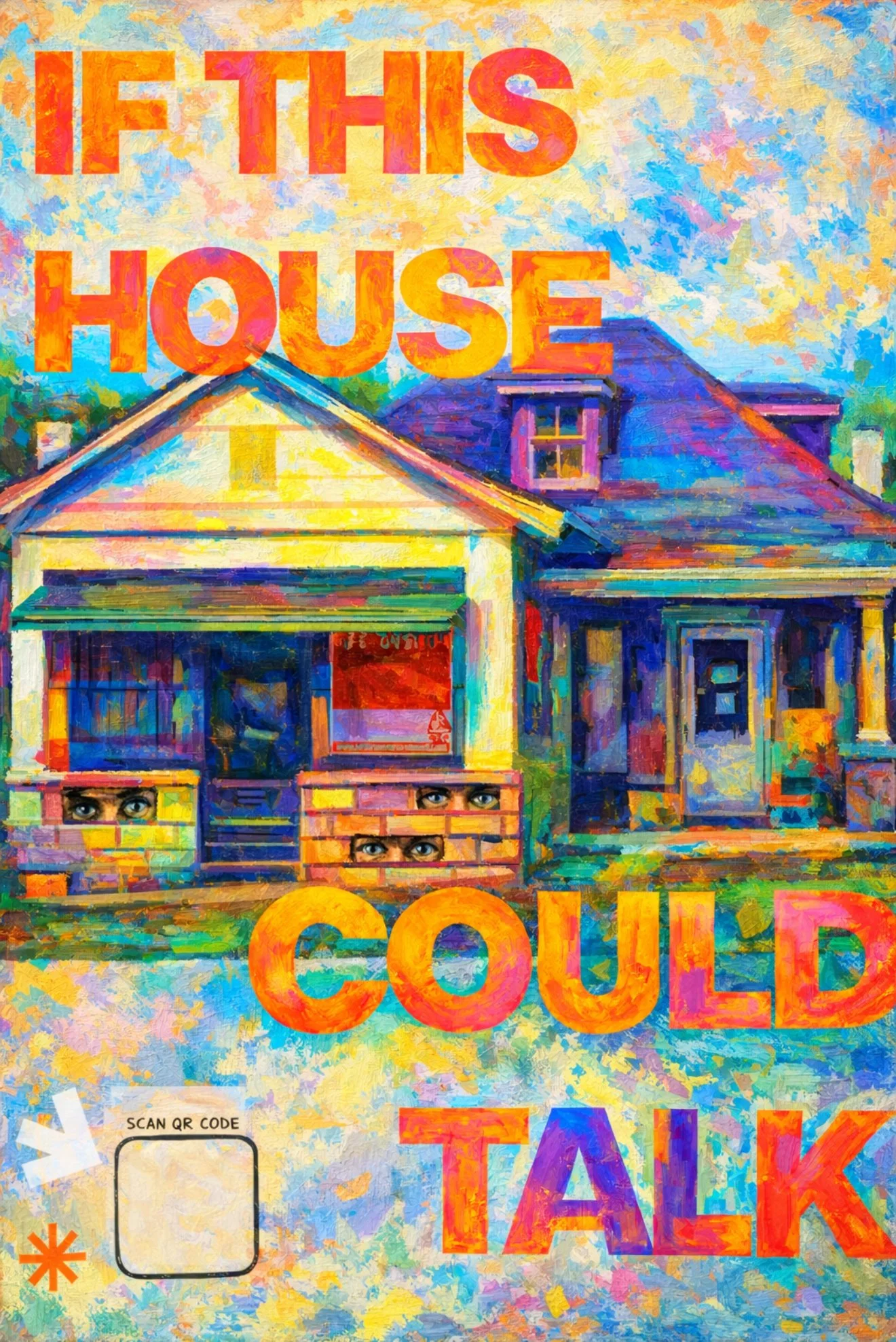
Jefferson Street Sound Museum HOUSE mural by Elisheba Mrozik
I was built in 1909 to serve as a home and creamery business for a Black man, Mr. Nathaniel Berry.
I had a front row seat for all the events on Historic Jefferson Street which was the backdrop for the Civil Rights Movement.
When Attorney Z. Alexander Looby’s home was bombed one street over on Meharry Blvd., it rocked my foundation to the core. Because of this violent act on April 19, 1960, 3,000 people, including students from Fisk University, Tennessee A&I (later Tennessee State University) and American Baptist College, marched right in front of me to go downtown to appeal to Mayor Ben West to desegregate lunch counters (April 19, 1960).
As the students passed by me with determination, pride, and respect, every one of my bricks applauded for their courage. With every intentional step they marched in peace, silence and non-violence.
Because of these brave students Nashville became the first major Southern city to experience widespread desegregation of its public facilities.
There are many songs that kept the marchers lifted to continue the mission of desegregation. Not just civil rights but human rights.
“We Shall Overcome,” “What’s Going On?”, “Oh Freedom Come,” “Respect,” “Blowin’ in the Wind,” “A Change is Gonna Come,” “We Shall Not Be Moved,” “Keep Your Eyes On The Prize,” “Lift Every Voice and Sing,” “This Little Light Of Mine,” “Glory, Glory Hallelujah,” “Say It Loud I’m Black and I’m Proud.”
I was in earshot when I heard James Lawson nearby at Clark Memorial Church teaching the adults and college students non-violent techniques – don’t fight back, stay silent don’t say a word.
Later that week I heard Reverend Kelly Miller Smith at first Baptist Church Capitol Hill comforting students that were attacked at the sit in at Woolworths lunch counter downtown. The students came back bloody and bruised, but their spirits were still high because they were successful taking a stand for civil rights, for human rights.
There was one night I heard John Lewis and Bernard Lafayette in their room at American Baptist College talking about staying the course of non-violent marches and sit-ins. They and other students were so brave and dedicated to the cause. They made me so proud to see them marching for equal rights.
Jefferson Street Sound Museum HOUSE mural
The journey continues, the struggle continues for civil rights and human rights – we continue to overcome.
Today, we as a community continue to reclaim and rebuild Historic Jefferson Street.
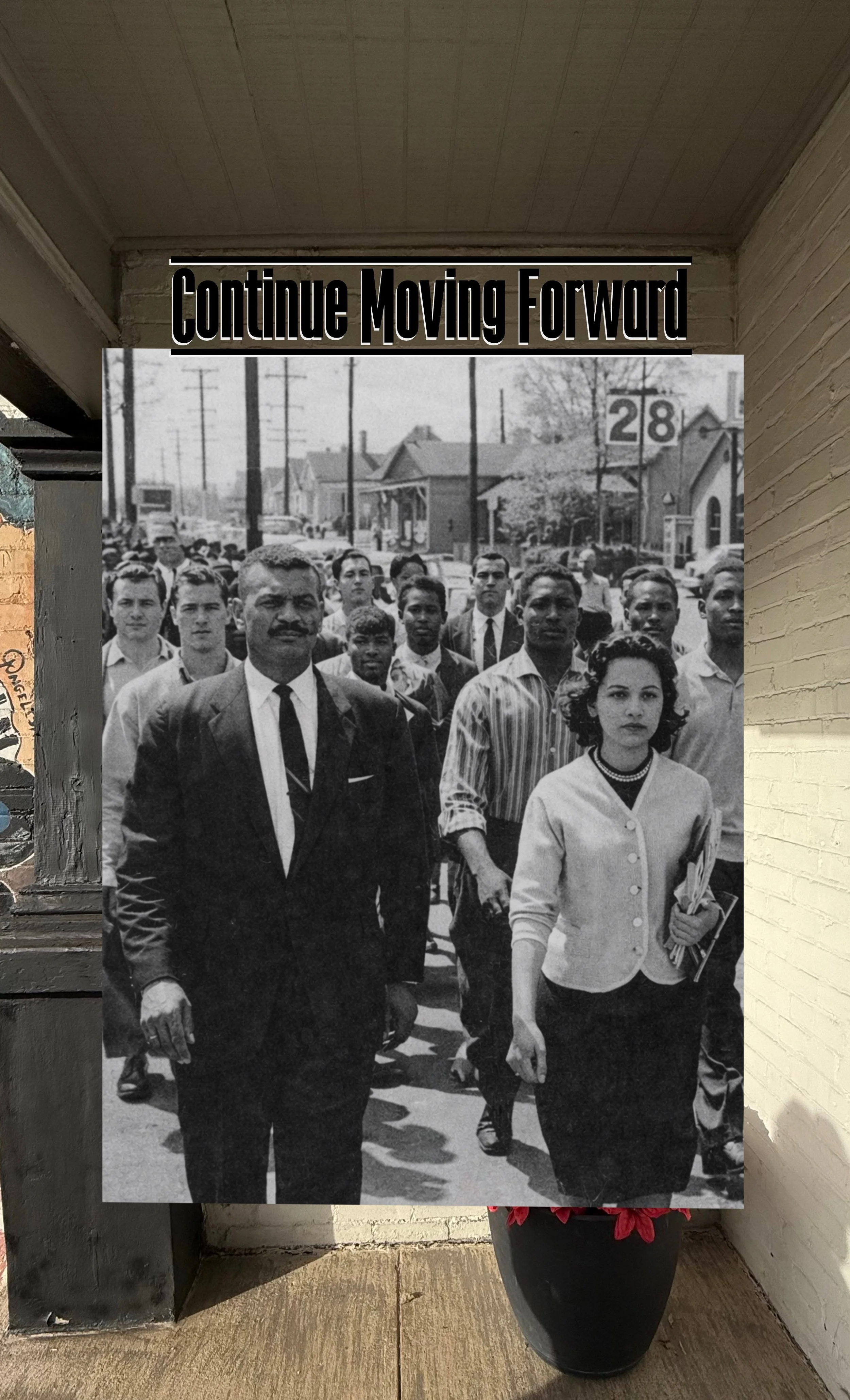
Jefferson Street Sound Museum CONTINUE MOVING FORWARD mural
In the fore front of the mural is Diane Nash an American civil rights activist, and a leader and strategist of the student wing of the civil rights movement.
On this day on April 19, 1960 Diane lead 3,000 people including students from Fisk University, Tennessee State University, and American Baptist College as they marched down Jefferson Street to downtown Nashville to appeal to Mayor Ben West to desegregate lunch counters.
Nash's campaigns were among the most successful of the era. Her efforts included the first successful civil rights campaign to integrate lunch counters; the Freedom Riders, who desegregated interstate travel; co-founding the Student Nonviolent Coordinating Committee (SNCC); and co-initiating the Alabama Voting Rights Project and working on the Selma Voting Rights Movement. This helped gain Congressional passage of the Voting Rights Act of 1965, which authorized the federal government to oversee and enforce state practices to ensure that African Americans and other minorities were not prevented from registering and voting.
In July 2022, Nash was awarded the Presidential Medal of Freedom by President Joe Biden.